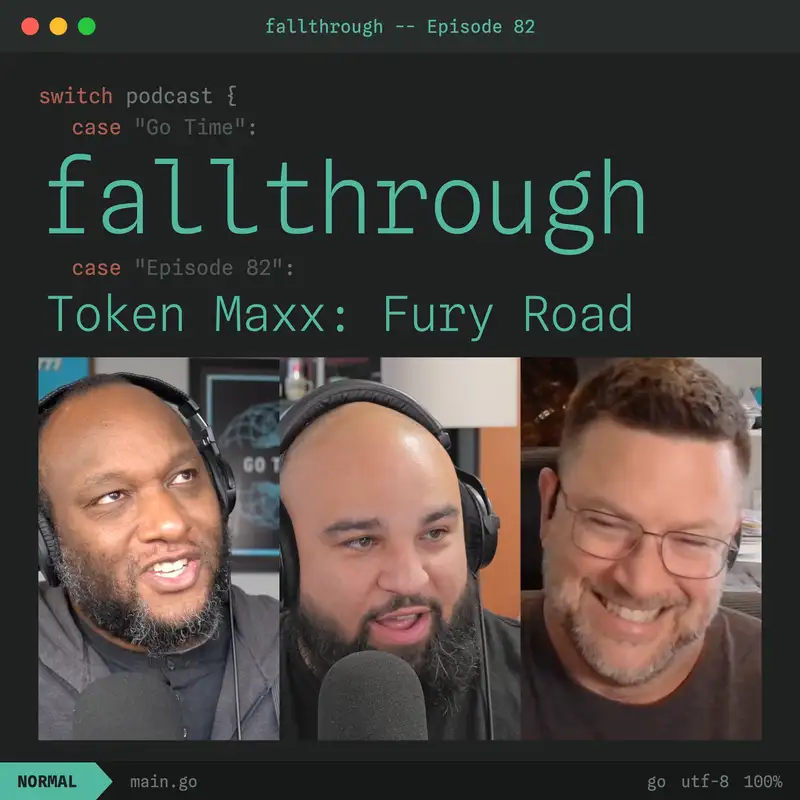
Token Maxx: Fury Road
On this week, we've got Kris, Matt, and Dylan! Yes, Dylan is back to talk about GopherCon and his experience as a self declared late adopter of agentic coding. Dylan chairs GopherCon, speaks at it next week, and describes his own AI hockey stick as happening in about two months.
Dylan walks through what is on the GopherCon program, then explains his coding agent tipping point: a dependency injection refactor he had written off that Claude finished in an afternoon. But he's not all in yet: he still won't let one robot review and approve another robot's code. From there the conversation turns to the machine underneath: the model as a CPU and the harness as an operating system. The trio then arrives at money and the uncomfortable reality of how expensive tokens are, and whether that matters at all. They also answer an important question: should enterprises be subsidizing the cheap subscription plans individuals enjoy?
We've got an Expanded edition for this episode which means we've got extra content! That includes what really happens to your conference proposal when 200 submissions compete for 25 slots, the mystery process that had Kris's Mac humming, the 200 gigabytes of Go module cache hiding on Dylan's drive, agents that shell out to Ruby and Perl when you asked for neither, caveman prompting, and the math on what a $250,000 engineer actually costs per month. Not a supporter yet? Fix that today by heading over to https://fallthrough.fm/subscribe where you'll get not only extra content but also higher quality audio. Sign up today!
If you prefer to watch this episode, you can view it on YouTube.
No episode of the aftershow this week. We'll have more aftershow episodes soon! In the meantime, catch up on previous episodes at https://break.show.
Thanks for tuning in and happy listening!
Dylan walks through what is on the GopherCon program, then explains his coding agent tipping point: a dependency injection refactor he had written off that Claude finished in an afternoon. But he's not all in yet: he still won't let one robot review and approve another robot's code. From there the conversation turns to the machine underneath: the model as a CPU and the harness as an operating system. The trio then arrives at money and the uncomfortable reality of how expensive tokens are, and whether that matters at all. They also answer an important question: should enterprises be subsidizing the cheap subscription plans individuals enjoy?
We've got an Expanded edition for this episode which means we've got extra content! That includes what really happens to your conference proposal when 200 submissions compete for 25 slots, the mystery process that had Kris's Mac humming, the 200 gigabytes of Go module cache hiding on Dylan's drive, agents that shell out to Ruby and Perl when you asked for neither, caveman prompting, and the math on what a $250,000 engineer actually costs per month. Not a supporter yet? Fix that today by heading over to https://fallthrough.fm/subscribe where you'll get not only extra content but also higher quality audio. Sign up today!
If you prefer to watch this episode, you can view it on YouTube.
No episode of the aftershow this week. We'll have more aftershow episodes soon! In the meantime, catch up on previous episodes at https://break.show.
Thanks for tuning in and happy listening!
Table of Contents:
- Prologue (00:00:00)
- Chapter 1: GopherCon Next Week: Community Day, Filippo, and slog (00:03:25)
- Chapter 3: Foot Dragger: The Refactor Claude Finished in an Afternoon (00:13:05)
- Chapter 4: Fashionably Late: CoreWeave, and Dylan's AI Hockey Stick (00:22:03)
- Chapter 5: Token Hunger and Overzealous Junior Engineers (00:30:25)
- Chapter 6: The Harness Is the Operating System (00:36:07)
- Chapter 7: Two Skills Worth Writing: Dependabot Chains and Chaos Forensics (00:42:12)
- Chapter 9: Context Is Everything: Bootloaders, Distros, and Second Opinions (00:50:04)
- Chapter 11: Thinking Tokens, and Why the Model Is the Product (00:58:22)
- Chapter 12: Who Pays for the Tokens: Personal Plans vs Enterprise Tiers (01:00:45)
- Chapter 14: If Everybody Does It: Token Maxx and the TOS Problem (01:08:54)
- Chapter 15: Talking Matt Into GopherCon, Live (01:17:39)
- Epilogue (01:23:09)
Socials:
- (00:00) - Prologue
- (03:25) - Chapter 1: GopherCon Next Week: Community Day, Filippo, and slog
- (13:05) - Chapter 3: Foot Dragger: The Refactor Claude Finished in an Afternoon
- (22:03) - Chapter 4: Fashionably Late: CoreWeave, and Dylan's AI Hockey Stick
- (30:25) - Chapter 5: Token Hunger and Overzealous Junior Engineers
- (36:07) - Chapter 6: The Harness Is the Operating System
- (42:12) - Chapter 7: Two Skills Worth Writing: Dependabot Chains and Chaos Forensics
- (50:04) - Chapter 9: Context Is Everything: Bootloaders, Distros, and Second Opinions
- (58:22) - Chapter 11: Thinking Tokens, and Why the Model Is the Product
- (01:00:45) - Chapter 12: Who Pays for the Tokens: Personal Plans vs Enterprise Tiers
- (01:08:54) - Chapter 14: If Everybody Does It: Token Maxx and the TOS Problem
- (01:17:39) - Chapter 15: Talking Matt Into GopherCon, Live
- (01:23:09) - Epilogue
Creators and Guests

Host
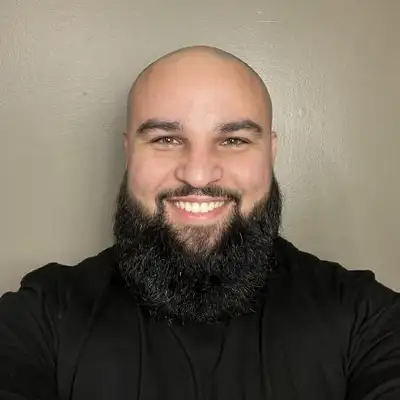
Matthew Sanabria
Matthew is an engineering leader focused on building reliable, scalable, and observable systems. Matthew is known for using his breadth and depth of experience to add value in minimal context situations and help great people become great engineers through mentoring. Matthew serves the Go community as a member of GoBridge. In his spare time, Matthew spends time with his family, helps grow his wife's chocolate business, works on home improvement projects, and reads technical resources to learn and tinker.